


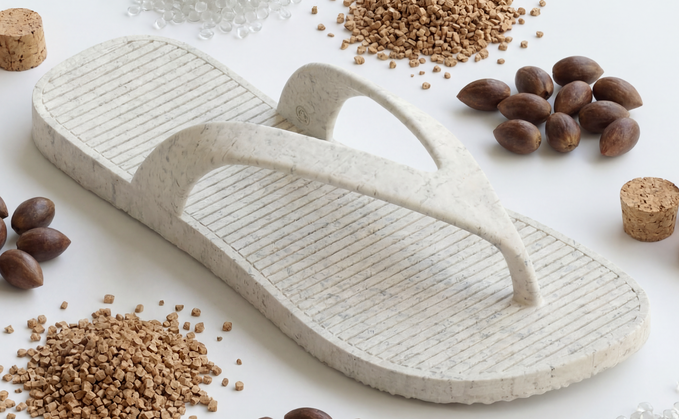
Primal co-founder and CEO David Even explains how the company is working to replace single-use hotel slippers with circular cork alternatives
BusinessGreen Intelligence: What was your background before launching?
David Even: Long before Primal, I was simply trying to understand my relationship with the world. My brother Jeremy and I have travelled together every year since he turned eighteen, choosing places that remind us how extraordinary our planet really is. Somewhere along those journeys I realised that travel does more than show us the world. It changes how we see ourselves within it.
During my MBA at SDA Bocconi School of Management, I discovered that business could become a force for stewardship rather than extraction. Looking back, I don't think Primal began in business school. Business school simply gave direction to questions I had been asking for years.
I once wrote in an old notebook, ‘I've got to know you, world'. Looking back now, I realise that sentence quietly became the foundation for everything that followed. My grandmother turns 103 this year. Watching one person witness more than a century of history has given me a deep appreciation for how briefly each of us holds the future before passing it on. It reminds me that we're not simply building businesses but contributing one small chapter to a much longer human story.
How does what you do contribute to the green transition?
The transition to a more regenerative economy will succeed when doing the right thing also becomes the rational thing. For too long, sustainability has been treated as a compromise rather than an improvement. I believe the future belongs to solutions that are simply better: better for guests, better for businesses and better for the places that make travel worthwhile.
At Primal, we redesign everyday hospitality products to last longer, be washed, reused and ultimately return safely to either a technical or biological cycle. By helping hotels shift their focus from purchase price to lifetime value, we show that good business and responsible business reinforce one another.
Ultimately, the transition is not just about replacing products. It is about replacing assumptions. When better choices also become better business, meaningful change can scale remarkably quickly.
How have you managed to achieve scale?
We've deliberately chosen collaboration over control. Hospitality presents a unique opportunity because a single decision by one hotel group can prevent hundreds of thousands of disposable products from entering circulation every year. Rather than trying to build every part of the system ourselves, we partner with organisations that share a long-term vision. True scale isn't measured by how many products we sell. It's measured by how many decisions we help change.
Is there anything you know now that you wish you'd known when you started out?
I wish I had understood that building the right company is more important than building the fastest one. When I started, I thought entrepreneurship was primarily about products. Today, I believe it is almost entirely about people. The partners you choose, the culture you create and the principles you refuse to compromise ultimately shape everything else.
I've also learned that patience is not the opposite of ambition. Some opportunities are worth waiting for, and some compromises are simply too expensive, no matter how attractive they appear in the short term.
What is the question you get asked most about your technology or innovation?
The question I hear most often is whether sustainability inevitably costs more. I think that's the wrong question. A better question is whether we are measuring value correctly.
For decades, many purchasing decisions have focused almost exclusively on the lowest purchase price. But purchase price rarely reflects the true cost or value of a product over its lifetime. When hotels begin comparing products based on lifetime value rather than upfront cost, the conversation changes completely. Circular solutions stop being purely an environmental choice and become a commercial one as well. Perhaps we simply need to ask better questions.
What advice would you give would be clean tech entrepreneurs or innovators who are just starting out?
Start with a problem worth solving, not a technology worth selling.
Spend as much time understanding the people you hope to serve as you do refining your solution. Stay curious, remain humble and be willing to change your mind when reality teaches you something new.
Most importantly, develop your philosophy before you develop your product. Products evolve. Markets change. Technologies become obsolete. But the principles on which you build your company will shape every decision you make long after your first product has disappeared.
What is the biggest way what you currently do differs from the initial vision you had?
Initially, we wanted to make better footwear. Today, we're trying to help redefine hospitality. Somewhere along the journey, I realised we were never really in the slipper business. We are in the business of helping people discover the world without diminishing it for those who follow.
Hospitality became our focus because it is humanity's infrastructure for exploration. Every meaningful journey begins with someone leaving home, and every hotel has an opportunity to shape that journey. Every interaction, no matter how small, contributes to the experience a guest takes home.
If we can help the industry create experiences that are better for guests, better for operations and better for the places people travel to discover, then we've achieved something far greater than launching another product.
What single policy would you like to see enacted that would help advance your technology or sector?
I'd like to see procurement evolve. For decades, too many purchasing decisions have been based almost entirely on the lowest purchase price. That approach rarely reflects the true cost or value of a product over its lifetime.
I would encourage governments, hotel groups and public institutions to adopt procurement criteria that evaluate products based on lifetime performance, durability, repairability, recyclability and total cost of ownership rather than simply upfront cost.
Procurement quietly shapes markets more than most people realise. Change the questions buyers ask, and you change the products companies choose to build. If we reward long term value instead of short term cost, innovation will naturally move in the same direction.
Besides your own sector, where would you say the biggest opportunities lie for green start-ups?
I believe the greatest opportunities exist wherever we've stopped asking questions.
Some of the most impactful innovations won't come from creating entirely new industries. They'll come from rethinking the ordinary systems we interact with every day. Hospitality is one example, but the same is true for healthcare, education, mobility, construction and public infrastructure.
The entrepreneurs who shape the next decade won't simply invent better technologies. They'll challenge assumptions that everyone else has accepted for years and redesign everyday systems so thoughtfully that the responsible choice simply becomes the better choice.
The world doesn't need more products. It needs better questions, expressed through better products.

